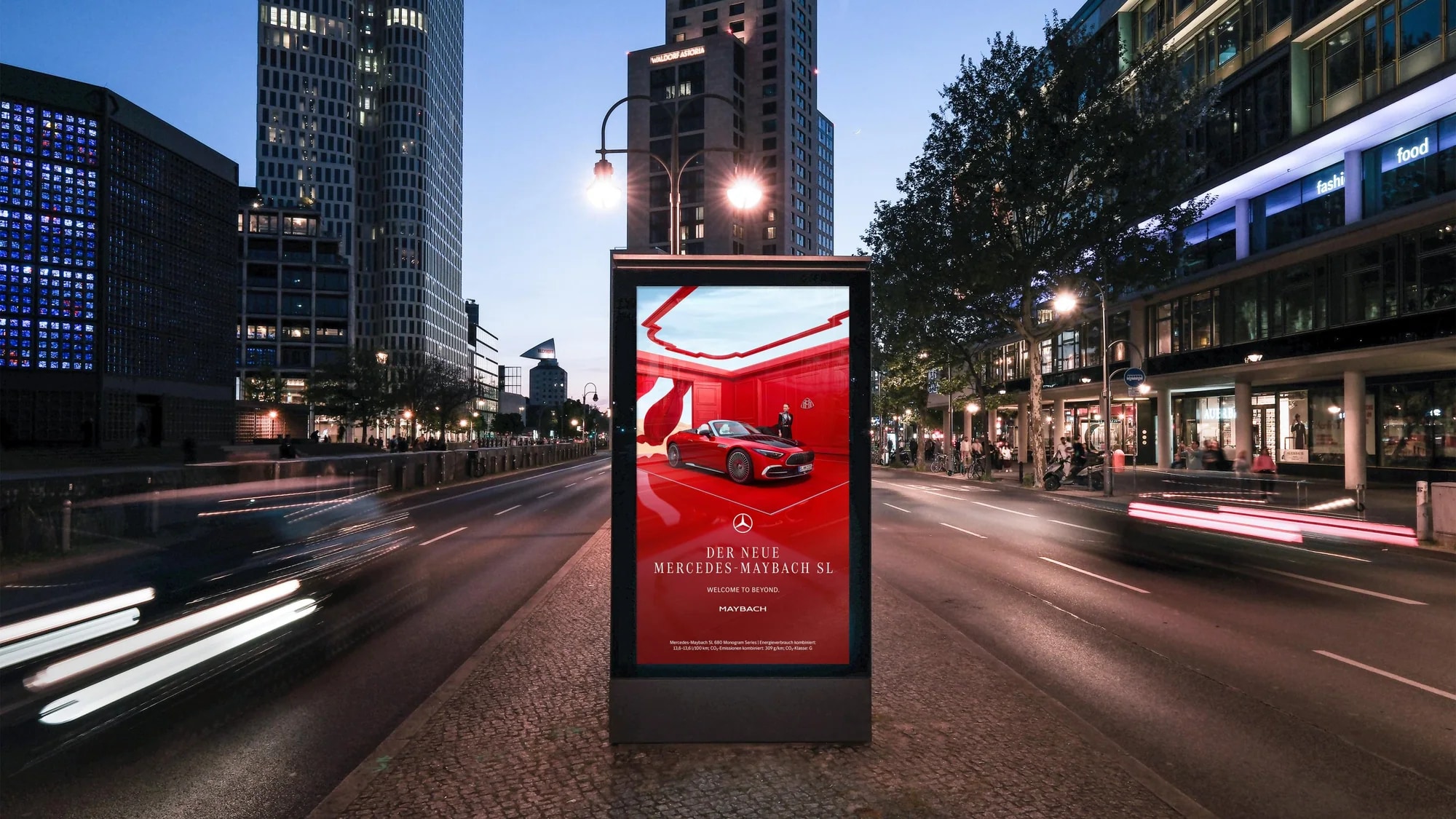
Full-funnel outdoor
We combine Dotonbori's street level signage with wider Osaka placements for a campaign that works at every stage of the funnel.

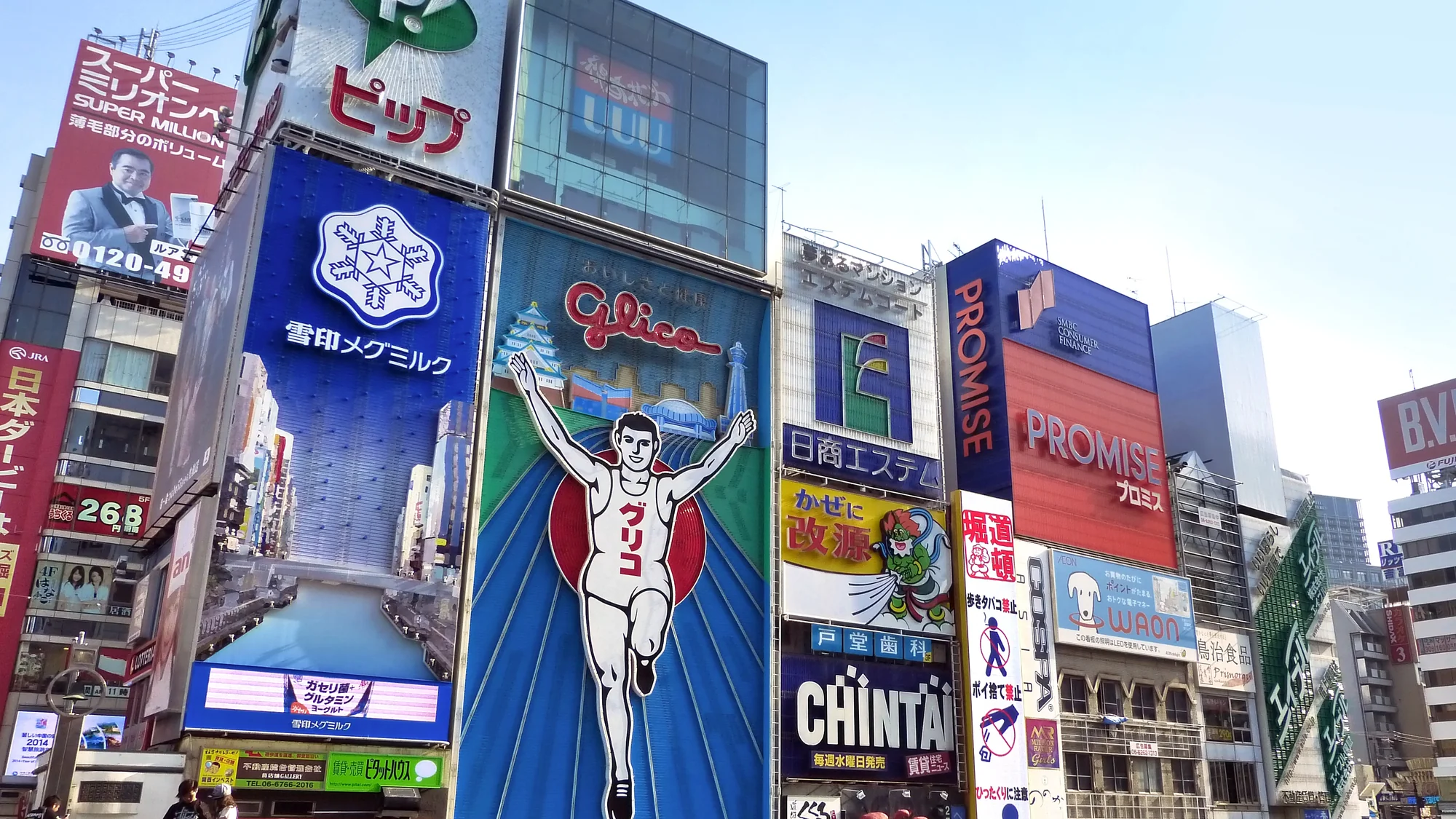
Dotonbori's canal side strip has run on illuminated signage since the nineteen thirties, when the Glico running man first lit up the Ebisubashi Bridge. Giant character billboards, including Kani Doraku's moving crab, sit alongside it today, all facing a canal walk that draws a large share of Osaka's fourteen million annual international visitors past the same handful of buildings.
A sign in Dotonbori?
People stop on the bridge to photograph the canal. Send the dates and we will see what faces the water.
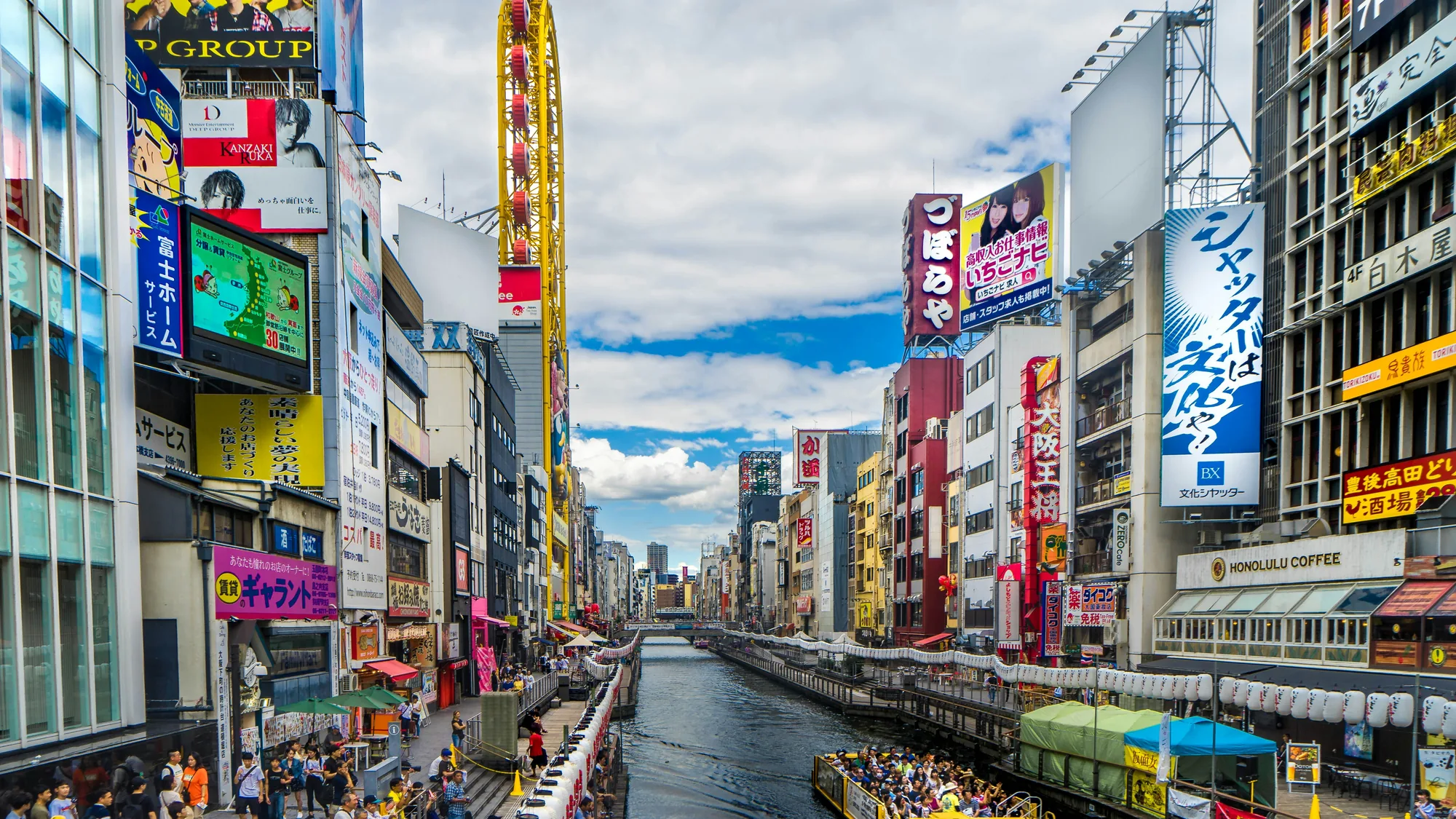
Dotonbori works as an advertising placement because people go there to look at the signs. The Glico running man has anchored the Ebisubashi Bridge view since 1935, rebuilt six times and rendered in LED since 2014, and it shares the strip with character billboards like Kani Doraku's giant moving crab. Osaka drew 14.58 million international visitors in 2024, and the canal walk through Dotonbori is one of the destinations most of them make a point of visiting. Space along the strip is typically sold through seasonal takeovers and rotating panel placements.
1935
Year the Glico sign debuted
Ezaki Glico's running man sign has overlooked the Ebisubashi Bridge since 1935, rebuilt six times since, most recently as an LED display in 2014.
20m x 10.38m
Current Glico sign display size
The sixth generation LED sign spans this footprint above the canal, one of the most photographed backdrops in Osaka.
14.6 million
International visitors to Osaka (2024)
Osaka recorded 14.58 million international visitors in 2024, and Dotonbori is consistently one of the areas they walk through.
A backdrop peoplealready share
Dotonbori's signs are photographed constantly by visitors walking the canal, so a well placed campaign here tends to appear in travel photos and social posts long after anyone has left the bridge.
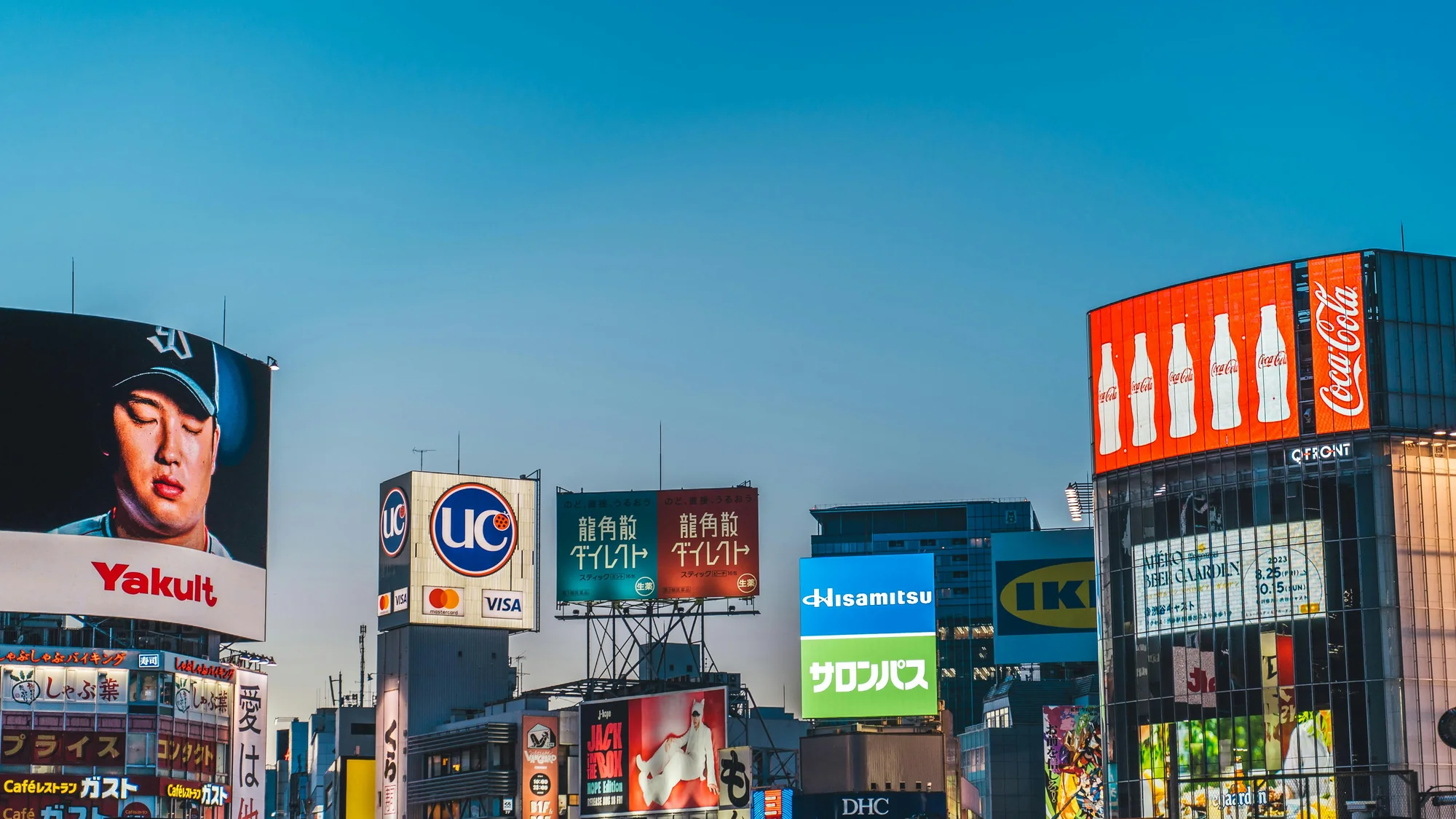















Osaka's outdoor media runs on a different rhythm to Tokyo's, with more emphasis on street level signage than transit screens, and Dotonbori sits at the centre of that. We plan bookings around the city's festival calendar and tourist peaks, then handle the sign operator relationships directly so your campaign lands when foot traffic is highest.
We combine Dotonbori's street level signage with wider Osaka placements for a campaign that works at every stage of the funnel.
We combine Dotonbori's street level signage with wider Osaka placements for a campaign that works at every stage of the funnel.
Our team turns your brief into a confirmed Dotonbori placement, managing sign specs and permissions with each building owner directly.
Two decades in Japanese outdoor media means we know which Osaka sign operators book early and which have more flexibility.
We advise on scale and finish upfront, so creative built for Dotonbori's illuminated signs reads correctly both in daylight and at night.
We help your brand go big, without overpaying or waiting weeks for quotes. From quoting, planning, booking, municipal approvals, production and installation, we handle it all under one roof.
Explore other landmark advertising opportunities across Japan, or discover iconic sites in other countries.
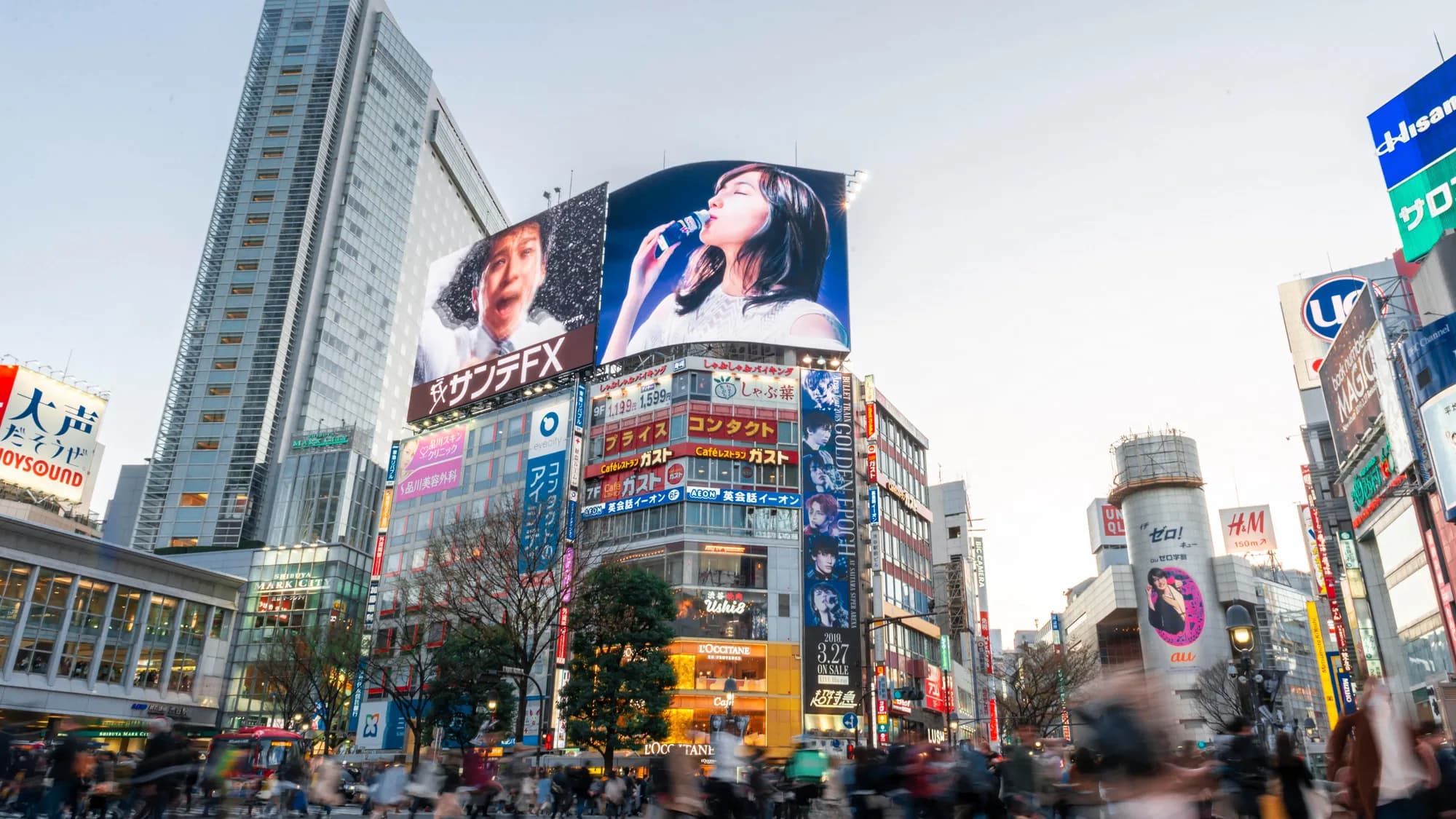
Tokyo
Tokyo

Dubai
See outdoor advertising opportunities at other landmark destinations across regions and cities worldwide.
Explore Global LocationsThe Glico sign itself is Ezaki Glico's own branded fixture, so it is not available as general advertising space, but the buildings and billboards around it along the Ebisubashi Bridge strip are. Several canal facing panels and building wraps sit within the same sightline tourists use to photograph the Glico sign, which is where most brand campaigns in the area actually run. We can point you to what is genuinely bookable rather than the sign people mistake for available inventory.
The original sign went up in 1935, making it one of the older pieces of commercial signage still standing in Japan. It has been rebuilt six times since then to keep pace with the technology of each era, and the current version, a high resolution LED display, has been in place since October 2014. Its age is part of why it draws attention, since it predates almost everything else on the strip.
There is no official count for Dotonbori on its own, but Osaka recorded 14.58 million international visitors in 2024, and Dotonbori's canal walk is consistently named among the areas those visitors go to. Local sightseeing and cultural visits made up around 18 percent of trips to Osaka that year, and Dotonbori features heavily in that figure alongside destinations like Osaka Castle. That volume is a large part of why signage here gets so much attention.
Dotonbori's signs are built to work in both, but night is when the strip is best known, since the neon and LED signage is what most people photograph after dark. Daytime footfall is still substantial and worth booking for, particularly for brands wanting broader daylight visibility rather than only a nighttime glow. We can advise on which panels perform better at which time based on where they sit relative to the canal.
Space along the Dotonbori strip is controlled by individual building owners and sign operators rather than a single authority, so availability and pricing vary panel by panel. We deal with those operators directly, which is usually faster than approaching each one separately, and can advise on realistic lead times once we know your dates. Popular positions near the Ebisubashi Bridge tend to book up furthest in advance.
The strip is known for its character billboards, including the giant moving crab outside Kani Doraku's restaurant and the drumming Kuidaore Taro doll, a mascot that has stood in the district since 1949. Both function as advertising in their own right, built to be recognised at a glance rather than read as text. Newer LED and 3D billboard formats have joined them in recent years, adding to what is already one of Japan's most concentrated signage strips.
Tell us the markets, the audience and the objective. Our specialists will build the plan and manage the campaign from briefing through to delivery.
Tell us the markets, the audience and the objective. Our specialist will come back with recommended formats, availability and next steps within 48 hours.
Share a brief and a specialist will come back with recommended formats, availability and next steps within 48 hours.